






The homeopathic medicine Hypericum perforatum (Hi-per-i-kum per-for-rai-tum) for relieving nerve pain* shares its Latin name with the plant commonly known as St. John’s Wort. But you’ll be surprised to learn the differences and shared traits between the two.
Hypericum’s Home
St. John’s Wort is an herbaceous plant that flourishes in open areas and temperate climates. It blooms around St. John the Baptist’s birthday, showcasing bright, yellow flowers with five petals each. The plant’s leaves are covered in numerous small, translucent spots that look like perforations when held up to the light, which is how it got its Latin name.
Hypericum in History
The first recorded medical use of the plant is by the ancient Greeks. Doctors of the time prescribed it in an herbal preparation for a range of ailments. Beyond its medicinal applications, people also believed the plant could offer protection against harm and sickness in spiritual practices during the Middle Ages.
Homeopathic Hypericum
Hypericum perforatum is still employed today, both as an herbal supplement and a homeopathic medicine, each for different uses.
Homeopathic preparations of Hypericum perforatum are used to help relieve nerve pain, which is supported through long practical experience and medical literature. According to a recent study, Hypericum perforatum 200C was found to lessen the need for conventional pain medications, making it a valuable option when managing nerve pain. Homeopathic practitioners and health professionals, like Dr. Payam Hakimi, DO, highlight this medicine as particularly beneficial for individuals experiencing sharp, radiating pain that travels along the nerve’s path.
“In many of the cases I see, Hypericum perforatum is the first choice for relief,” says Dr. Hakimi, who uses this and other homeopathic medicines in his practice which specializes in osteopathic and cranial therapy for the treatment of migraines, sciatica, carpal tunnel, and other pain conditions.
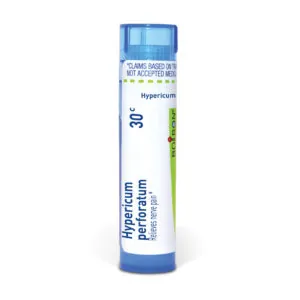
Boiron’s indication for Hypericum perforatum is nerve pain such as from nerve trauma, like pain in the legs and back or toothaches.* Boiron offers this as a Targeted Relief Medicine and a bonus pack of three tubes.
Interested in learning more about the homeopathic uses of Boiron Hypericum perforatum? Watch this video featuring pharmacist Gary Kracoff, NMD, RPh.
*Claims based on traditional homeopathic practice, not accepted medical evidence. Not FDA evaluated.






Going to try for nerve pain
Hi Nan,
Hypericum perforatum is indicated for nerve pain. However, make sure that if your symptoms last for more than 3 days or worsen that you contact your doctor, as these could be signs of a more serious condition.
Thanks!
I am suffering from nerve pain from shingles on my face and in my eye I have been to dr several times an eye dr a dozen times and now an ophthalmologist because of light sensitivity and pain in and around eye. I have debilitating sharp pains in my head. Not sure what I can do the dr issuing steroid drops in eye to calm inflammation but pain is excruciating
Hi Sherry,
We have some information regarding the use of Rhus tox for small blisters: Poison Ivy: More Than Just a Nuisance.
If you are experiencing eye irritation with irritating tears and clear, non-irritating nasal discharge, try Euphrasia officinalis 6C
If you have itchy eyes and swollen eyelids, relieved by cold compresses, try Apis mellifica 30C.
As a manufacturer, we offer over-the-counter medicines with clear indications for acute conditions that can be safely relieved with self-medication. Each medicine is labeled with the most common acute condition it relieves. However, health care professionals may instruct their patients to use the medicine for other conditions not listed on the label.
There may be a homeopathic treatment that addresses your condition, but we recommend consulting a practitioner knowledgeable in homeopathy. If you do not have a practitioner, please contact the National Center for Homeopathy at info@homeopathycenter.org or visit http://www.homeopathycenter.org.
Thanks!